
Annapolis City Directory Collections
Historical Annapolis city directories sit on the shelf as separate publications, not one continuous database. The Maryland State Archives traces a business directory from 1875, an 1887 gazetteer, and local excerpts for 1896–97. Named directories followed in 1910, 1924, 1934, and 1939, plus a 1972 Polk volume. Telephone books and reverse directories fill some quiet years. Each serves a different purpose. Before drawing any conclusion, record the edition, the publisher or collection, the page, and whether the line is a residence, a business, an institution, or a subscriber entry.
| Collection | Years | Where Held | Access |
|---|---|---|---|
| Boyd's Business Directory and Maryland gazetteer | 1875; 1887 | Maryland State Archives microfilm and guide references | Confirm the reel or call number |
| Annapolis I Remember and related directory runs | 1896–97, 1910, 1924, 1934, 1939 | MSA SC2140 and related collections | Digitized pages or microfilm, depending on edition |
| Polk's Annapolis directories | 1928–29, 1934, 1939, 1972 | MSA SC4369, SC2140, and REF A-4-4 | Archive collection access |
| Telephone directories | 1909, 1932, 1936–37, 1947–48 | MSA SC2140 | Collection access |
| Criss-cross directories | Annapolis 1964–72; county 1973–95, except 1983 and 1991 | Library of Congress | In-person paper-slip request |
The directory guide pairs each year with its collection.
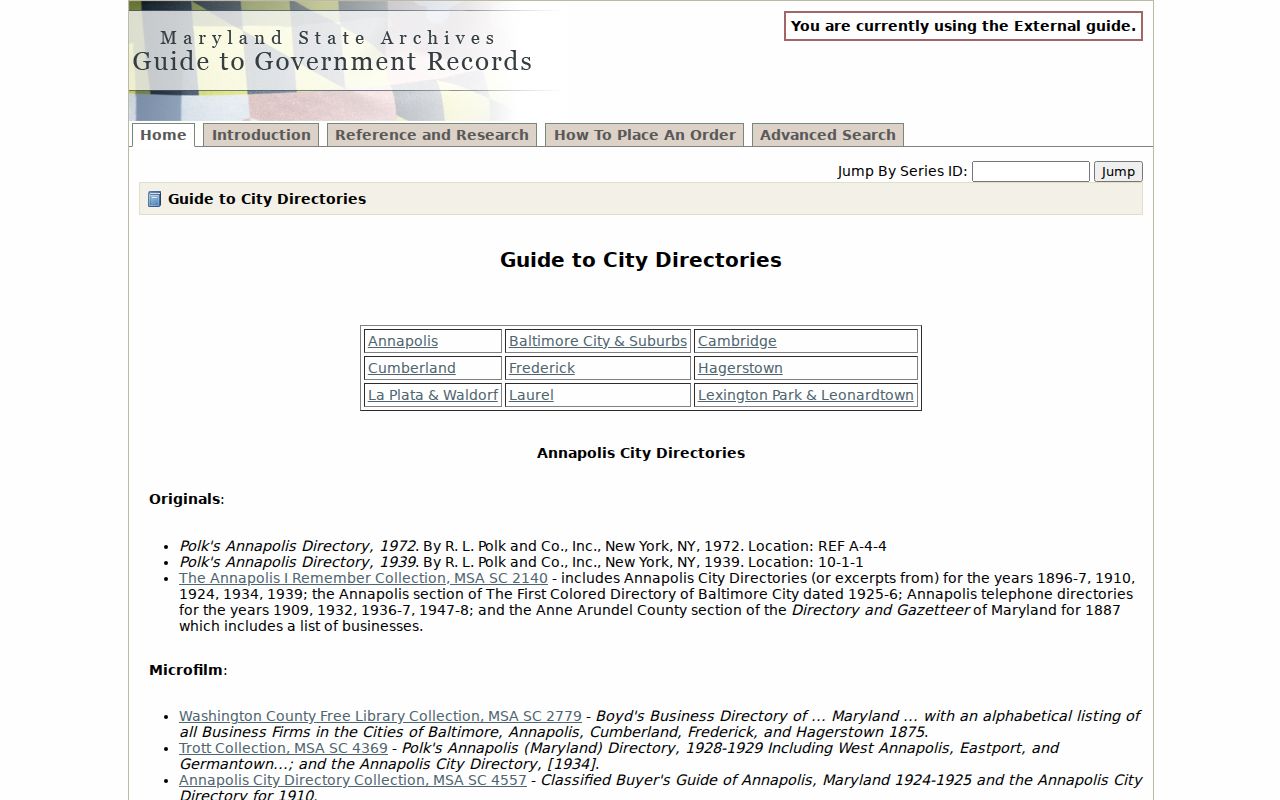
Publication gaps shape every search. The guide supports an edition-by-edition approach rather than promising coverage for years that were never printed. No definitive first or last household-directory year is established. The known volumes are scattered snapshots. They offer no annual continuity. A directory entry is evidence for its edition alone, proving neither current occupancy, a complete household, nor a lasting tie to the same address.
Annapolis City Directory Runs Worth Citing
The 1910 Gould & Halleron material and the 1924 Annapolis directory earn special attention. Both preserve their headings and abbreviations. The 1910 pages can place a name beside a title or occupation, business or residence details, a neighborhood indicator, and sometimes a naval connection. The 1924 object goes further. Its front matter includes a title and contents area, a street guide, name and business pages, and an abbreviation key. Cite the page URL and number with the edition. Another researcher can then check the exact printed line. The digitized 1924 Annapolis directory is the online edition, and MSA holds nearby years for comparison.
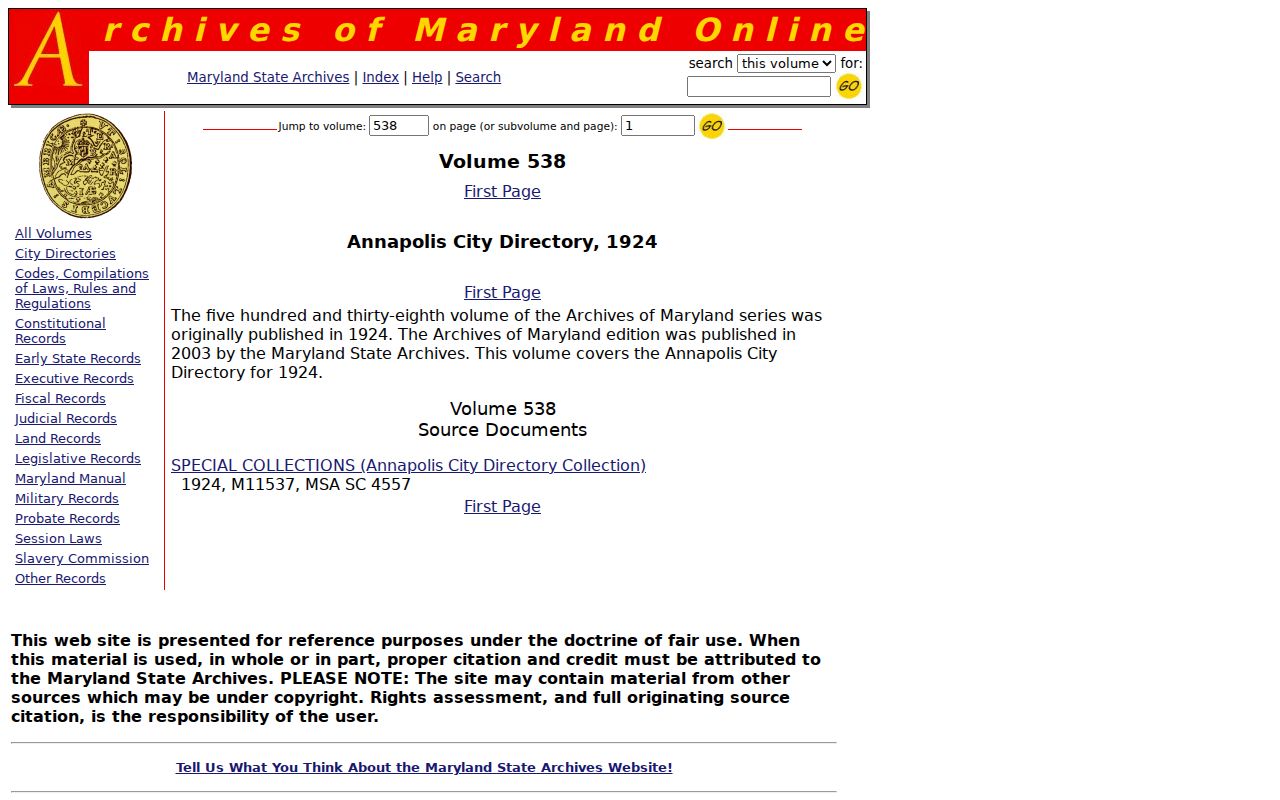
The digital publication allows page-level transcription, yet a historical listing is not an identity record. That limit matters. The 1924 street guide may supply a cross-reference that a name page omits. A neighborhood clue can narrow a census search. Never modernize a printed street form in silence. Annapolis grew around a waterfront with streets radiating outward, so cross streets, lot shapes, and older map evidence often explain an address that refuses to line up with a modern one. Keep the original spelling and cite the page.
Annapolis City Directory Research at the Maryland Room
AACPL offers the local library route when a digitized directory page cannot finish the job. Its local-history collection centers on the Maryland Room at Michael E. Busch Annapolis Library, 1410 West Street. Books, manuscripts, maps, photographs, and subject files surround them. Its genealogy resources and local partners extend the reach. Ask before relying on a catalog hit. Public pages do not list exact current holdings for every Annapolis directory year. Name the edition, collection, or call number you need. The AACPL local-history collection page describes the Maryland Room and the Joan Cass Beck and Kuethe research route.
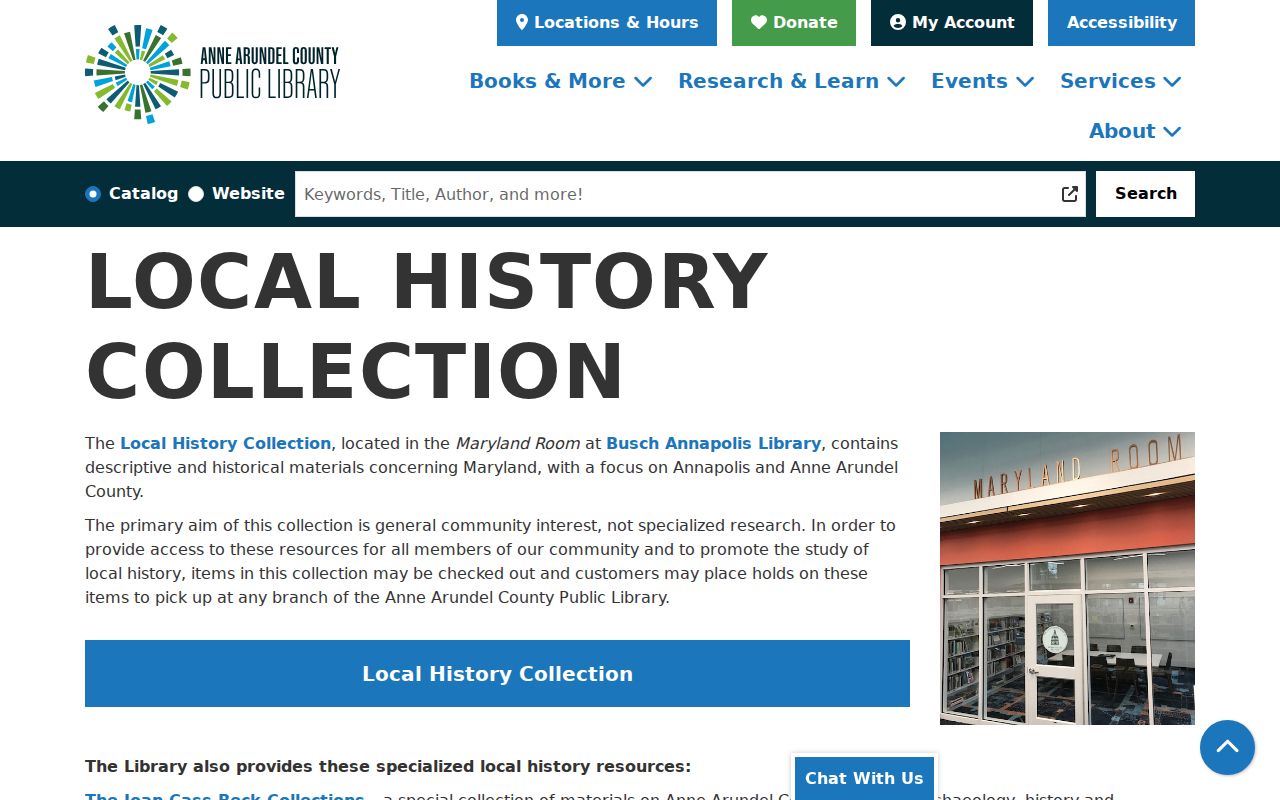
Local books, maps, and subject files add context where a directory prints only a terse address or occupation. The AACPL genealogy resources page lists Ancestry Library Edition, HeritageQuest, Newspaper Archive USA, Fold3, and historical newspaper access for in-library use. These are companions, not substitutes. Census schedules carry their own enumeration dates. Newspaper OCR can miss a name or a street. Always inspect the underlying page image. Note the source's geographic label too, since it may describe a ward, a postal place, or a county setting rather than the modern city boundary.

The library offers a second dated source for a household line. A directory listing still cannot serve as proof of where someone stands today.
Reading an Annapolis City Directory Entry
Read an Annapolis city directory entry exactly as the publisher printed it. The 1924 pages show a surname and given name, an occupation, a title or business, a street address, residence or service abbreviations, a street-guide cross-reference, and institutional or neighborhood labels where printed. The 1910 page works differently. It separates a name from a title or occupation, business or residence, and a neighborhood indicator. A naval reference can signal institutional geography. It establishes no permanent residence and no current connection.
| Name | Surname and given name as printed in the sampled edition |
|---|---|
| Work or title | Occupation, title, or business where the page actually prints one |
| Address | Street address or business or residence location as printed |
| Abbreviation | Residence or service notation such as h, r, or dom, read with that volume's key |
| Context | Street-guide cross-reference, institution, or neighborhood label where visible |
- Criss-cross directory
- A reverse directory arranged from an address or telephone number toward an occupant or subscriber.
- Householder index
- An index organized around a household or address, when a particular volume supplies one.
- Abbreviation key
- The printed guide to the volume's shortened terms. Photograph or transcribe it before expanding a mark.
Not every field appears on every page. Spouse notations, separate business-location fields, and owner or occupancy marks come and go across the 1924 pages. Check the relevant edition and its key. Only then add those fields to an entry inventory. Note: A business listing, subscriber line, boarder reference, or institution entry may describe a role at a place rather than a complete household.
Annapolis City Directory Context at Kuethe
A single hit in an Annapolis residents directory volume sometimes needs a wider anchor. Genealogical collections nearby can supply the missing date and place. The Anne Arrundell County Historical Society describes a Kuethe Library holding genealogical collections. Its holdings also include books, photographs, documents, and artifacts. The Anne Arundel Genealogical Society adds detail: a Historical and Genealogical Research Center at the Kuethe Library in Glen Burnie. That center offers books, maps, CDs, obituary material, Bible records, church records, and county-research handouts. Treat both as collection leads. Staff or a finding aid must identify the specific item. No Annapolis city directory claim should rest on it before then. The Anne Arrundell County Historical Society describes the Kuethe Library collections in full.
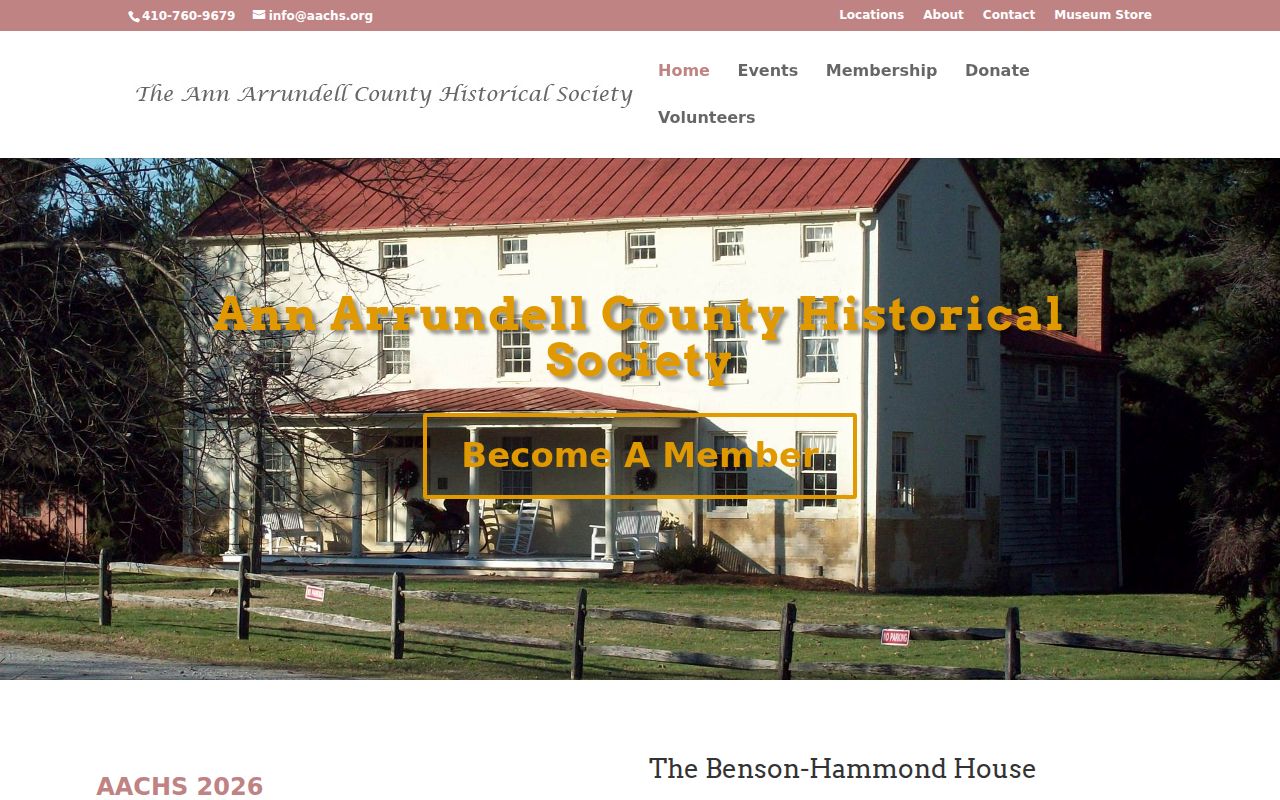
The collection-level description points a historical inquiry past the alphabetical city directory shelf. It leads toward broader holdings.
The Joan Cass Beck Collection is more specific about what is available. It holds more than 1,500 books, journals, and audio-visual items on heritage, archaeology, history, and preservation. Maryland Historical Magazine is also there, from 1908 onward. You will find it at Historic London Town and County Cultural Resources. The address is 2664 Riva Road, fourth floor. Visits run by appointment, at 410-222-7432.
The Society schedule lists Thursday and Friday from 10:00 to 4:00. Saturday runs from 10:00 to 2:00. Hours can shift with volunteers and seasons, so confirm before you travel.
Annapolis City Directory and Criss-Cross Years
Criss-cross books flip the usual city directory question. Instead of starting with a name, the reader starts with a street address or telephone number. From there, the page shows who the occupant or subscriber was for that edition. The Library of Congress holds Annapolis volumes covering 1964 through 1972. It also holds Anne Arundel County volumes covering 1973 through 1995. Two years are absent from the county run, 1983 and 1991. That matters for dating. A change spanning either gap should be treated as an unknown interval. It was not a move on a known date. For request details, the Library of Congress criss-cross directory guide explains the address-directory holdings. It also explains how to ask for them.
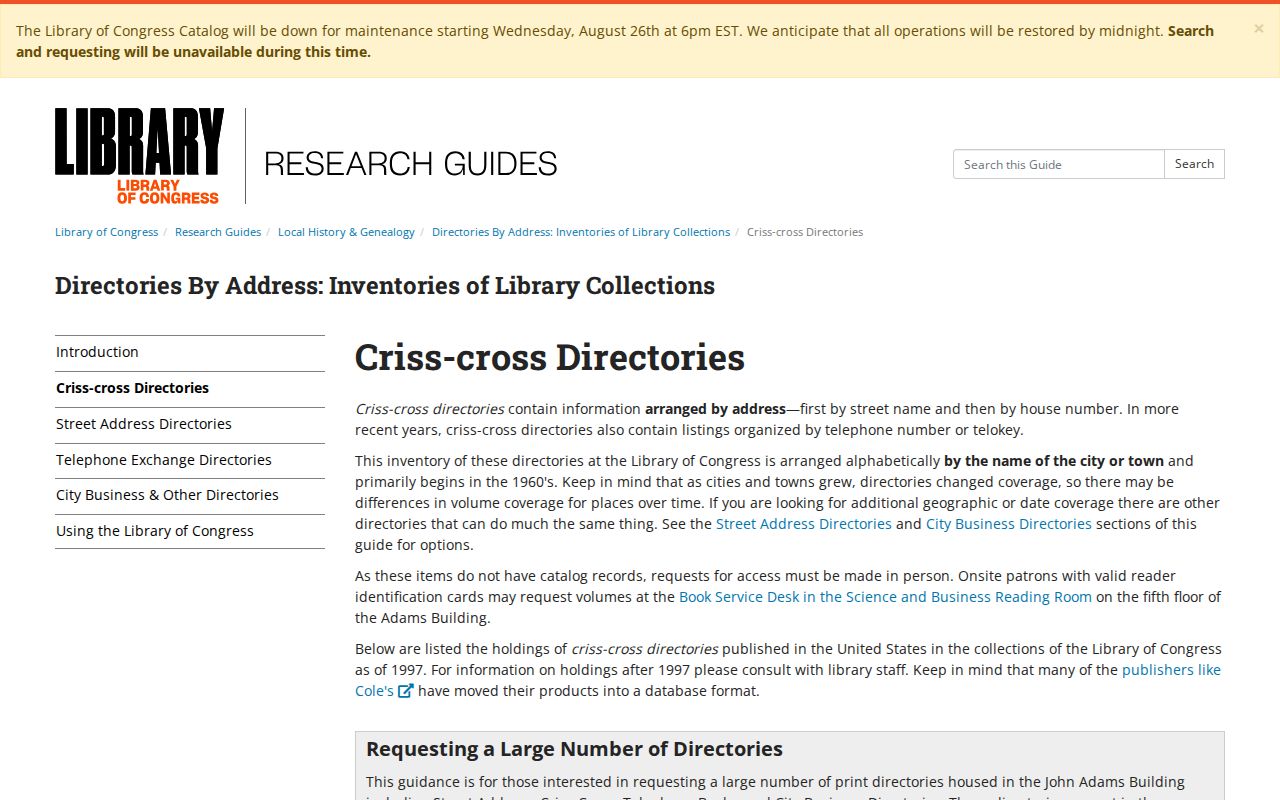
The Library of Congress route is an in-person affair. You submit a paper slip at least 24 hours ahead. Plan around the 40-request daily limit as well. Treat the reverse layer as a dated address clue rather than proof of anything more. Its best use comes in pairs, matched with a directory entry, the relevant census, or an obituary, always preserving the edition year. Current parcel or deed research is a different task. That belongs to the address-focused record trail.
Trace Annapolis City Directory Households
Family-history work gains strength when every source carries a date. Start from a known name or address in one edition. Then compare the next surviving edition instead of assuming each year exists. Record the exact spelling, any address form, and the occupation or business wording. Neighborhood and institution clues are worth writing down too. Pair the result with the closest available federal census schedule. The public schedules span 1790 through 1930 in the cited library routes, yet each reflects its own enumeration date and can label the geography differently.
- Choose one directory edition and transcribe the line exactly, including abbreviations and page number.
- Check the next available Annapolis or telephone directory edition, leaving a stated gap where no volume is captured.
- Use the street guide or criss-cross edition, when available, to test the address-side clue.
- Pair the nearest census year with the directory year and record the sheet or page, enumeration district, and geographic label.
- Use an obituary, probate item, newspaper notice, map, or deed only as a second dated anchor.
People vanish from the Annapolis city directory for many reasons. The volume may have used a different listing type. The street address may have changed. Or the household simply moved. Sometimes the compiler omitted a person altogether. A missing line is never proof of anything. Resist the urge to build a conclusion from an absence. For a modern address-keyed lookup, the current parcel, deed, and assessor tools answer the question far better than a historical residents directory stretched past its date.
Annapolis City Directory Chronology and Gaps
Annapolis directory coverage arrives in clusters. No single cutoff year divides what exists from what does not. The sequence opens with an 1875 business directory and an 1887 gazetteer, then runs through 1896–97, 1910, 1924, 1928–29, 1934, 1939, and 1972. Telephone runs fill in 1909, 1932, 1936–37, and 1947–48. Sanborn map editions of 1885, 1897, 1903, 1908, and 1921 can bridge questions about structures and street alignment that the street directory leaves open.
- 1875 and 1887: business and gazetteer sources provide early trade and place clues.
- 1896–97 through 1939: MSA directory excerpts, digitized editions, Polk volumes, and telephone runs create separated snapshots.
- 1964 through 1995: reverse directories provide an address-to-occupant or subscriber layer, with two stated county-run gaps.
- Current systems: digital archive pages, the 2025 Maryland Land Records portal, and separate GIS tools must be read as different record systems.
Historical labels need their historical context. The 1910 directory's printed racial marker and the 1925–26 First Colored Directory document segregation-era publishing. They are not modern identity categories. Annapolis heritage material helps place communities that general Polk or telephone runs underrepresent. The Fleet Street record helps do the same. Note: Keep a source's original wording when quoting it. Then explain its date and limits instead of modernizing or extending it.