
Annapolis Resident Lookup Records
A good Annapolis resident lookup starts with one narrow question at a time. The Maryland SDAT Real Property Search answers the property side of that question. Give it an address, an account number, or a map reference and it returns the owner name as recorded on the last deed, along with the situs, mailing address, parcel context, and transfer clues. It will not search by owner name or by ZIP code, though. The Maryland Judiciary Case Search covers a different territory as a public case index. The Maryland Voter Lookup tests one registration at a time. Each tool hands you a role in a record, never a complete resident identity.
| Record | What It Confirms | Where | Access |
|---|---|---|---|
| SDAT property record | Owner label, parcel, situs, mailing address, and deed-reference clues | Maryland SDAT | Free address, account, or map search; owner is not automatically an occupant. |
| Recorded deed or plat | Grantor, grantee, instrument dates, legal description, and prior references | Maryland Land Records and the Clerk | Free account route or courthouse terminal; copies are charged. |
| Voter registration | A nonconfidential registration match and election geography | Maryland Voter Lookup | Requires full name, date of birth, and ZIP; protected registrations are not confirmable. |
| Court index | Public party, case, court, status, and date information | Maryland Judiciary Case Search | Free index; the complete file remains with the court. |
| Vital or archival record | Event facts, family, or historical-date context | MDH or Maryland State Archives | Recent copies have entitlement rules; older series follow archival access rules. |
Match the source to the detail you already hold. An address anchors cleanly in SDAT and maps in Anne Arundel County GIS. A full name paired with a date narrows nicely in Case Search. It can also narrow in the Register of Wills. A live registration question goes to the voter form. The form requires its own set of fields before it returns anything. Older households are a different animal entirely. Directory editions, newspapers, probate files, and archive series will outperform any current parcel screen there. And a name alone, floating with no other detail, should never be enough. It should never tie a person to Annapolis in any residents directory or record set.
Annapolis Court Name Search
Case Search opens with an agreement screen. Accept it and you get two paths, a case-number route and an advanced party search. The official kiosk guide lays out the party search fields: party type, first and last name, court system, case type, Anne Arundel County, and a filing-date range, followed by sortable results and pagination. Names reach back to January 2006 in most courts. Older coverage varies, sometimes a great deal. Court, date, and case type are the levers that separate two people who share a name. The interface also caps results at 500, so a broad name sweep belongs in a city directory tradition of narrowing, not in any attempt at a full person search. Tighten the filters before drawing conclusions.
| Case Search field | How it helps verify a name |
|---|---|
| Party type and name | Distinguishes a person from a company entry and permits careful spelling variants. |
| Court system and case type | Separates different court routes and matter categories. |
| County and filing dates | Narrows the search to Anne Arundel and a relevant period. |
| Results and case number | Supplies the reference needed to request or inspect the court file. |
A Case Search hit can show name, city or state, case number, date of birth, trial date, charge, disposition, or related fields. The exact fields depend on the matter. That is a rich sample record inventory. It is not an invitation to claim an identity from one matching name. Read the party role, court, status, filing date, caption, and month or year of birth together as a set. The pattern confirms or breaks the match far better than a name alone ever could. The Maryland court-records page points to the right clerk. It also gives the proper public access route whenever an indexed entry needs checking against the actual file. For the complete state file, visit the Circuit or District Court clerk's public terminal. The clerk's file room works too. Request ordinary or certified copies directly from that court. No online shortcut replaces the file itself.
Note: Sealed, juvenile, expunged, shielded, and other protected material may be absent from the public index.
Annapolis Voter Lookup Fields
The Maryland voter form works as a match tool. It is not a true Annapolis resident roster. It asks for a first name, a last name, a full date of birth, and a five-digit ZIP. Street number and middle initial stay optional. They help only for narrowing results. The form itself suggests trying the spelling on the registration. It also suggests a former ZIP after a move. A past name after a legal change can work too. A hit can show registration status, polling place and districts, the local board, ballot status, and sample-ballot material. It will not list every person at a household. Ballot choices stay private.
The Maryland Voter Lookup form displays the required match fields. These support a careful Annapolis resident lookup.
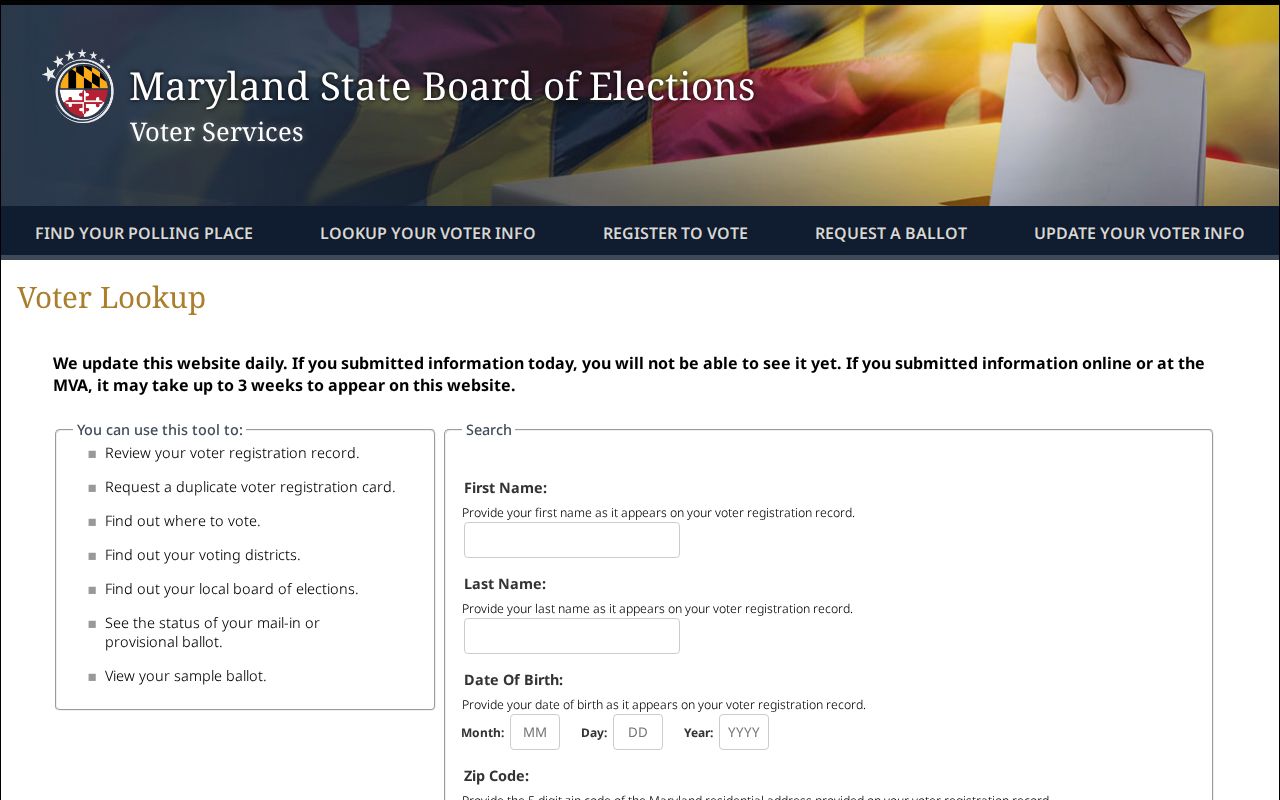
Spelling, birth date, and ZIP act as the identity controls. A name alone gives you none of that.
Maryland does allow controlled voter-list requests. County, district, and municipality products may carry permitted address and election-geography fields, but each request needs a written application and an oath, carries fees, and forbids commercial solicitation and non-electoral use. Election Law §§3-505 and 3-506 set the rules for inspection and list access. The online match route refreshes daily, though a new registration or address change can take up to three weeks to show. For questions about an existing election record or a confidentiality request, the Anne Arundel County Board of Elections is the local contact.
Verify an Annapolis Resident
Anchor any person-to-address match on two independent facts. An exact address paired with a dated directory entry can back each other up. A parcel record plus a named deed party traces a property trail cleanly. A court case number, the right court, and a date will split two namesakes apart. Common names deserve a third anchor. A middle initial, a date, an estate role, or an older directory edition all work well. Keep the source date too. Owner, voter, party, decedent, and licensee are different roles a person can hold at different times.
- Normalize the address, including its street number, suffix, ZIP, municipality, county, and any historic name or number.
- Search SDAT by the supported address, account, or map route, then keep the situs, mailing address, parcel, and owner-as-last-deed label separate.
- Use the matching full name and date range in Case Search, narrowing to Anne Arundel before reading the result fields.
- Use a date-appropriate voter, directory, probate, newspaper, or vital route to confirm the second anchor rather than repeating the same kind of evidence.
- Request an official copy only from the custodian when the underlying document, not the index entry, is needed.
- Docket
- The court's running record of filings, events, and case activity. A docket entry is not the complete case file.
- Index and image
- An index points to a record through fields such as name or case number. An image is the scanned document or page itself, which may need a custodian request or terminal access.
- Certified copy
- A copy issued and authenticated by the record custodian. It carries more official weight than a screen result or an ordinary copy.
When the question widens to a whole road, the address-by-address approach fits the Annapolis Street Directory better than a one-person verification trail.
Annapolis Vital Record Access
For event documents rather than identity browsing, the Maryland Department of Health Division of Vital Records is the controlling office. It sets the identity and relationship rules for current certificates. Maryland Health-General §4-224 governs who may receive confidential copies. Government Services §9-1015 opens a public-access path for birth records older than 100 years and death records older than 10 years. Marriage licenses and absolute divorce or annulment records follow the same statute. Anything more recent stays under MDH eligibility rules.
The birth-record access page lays out the entitlement review applied to a current request. It also covers the identification review.
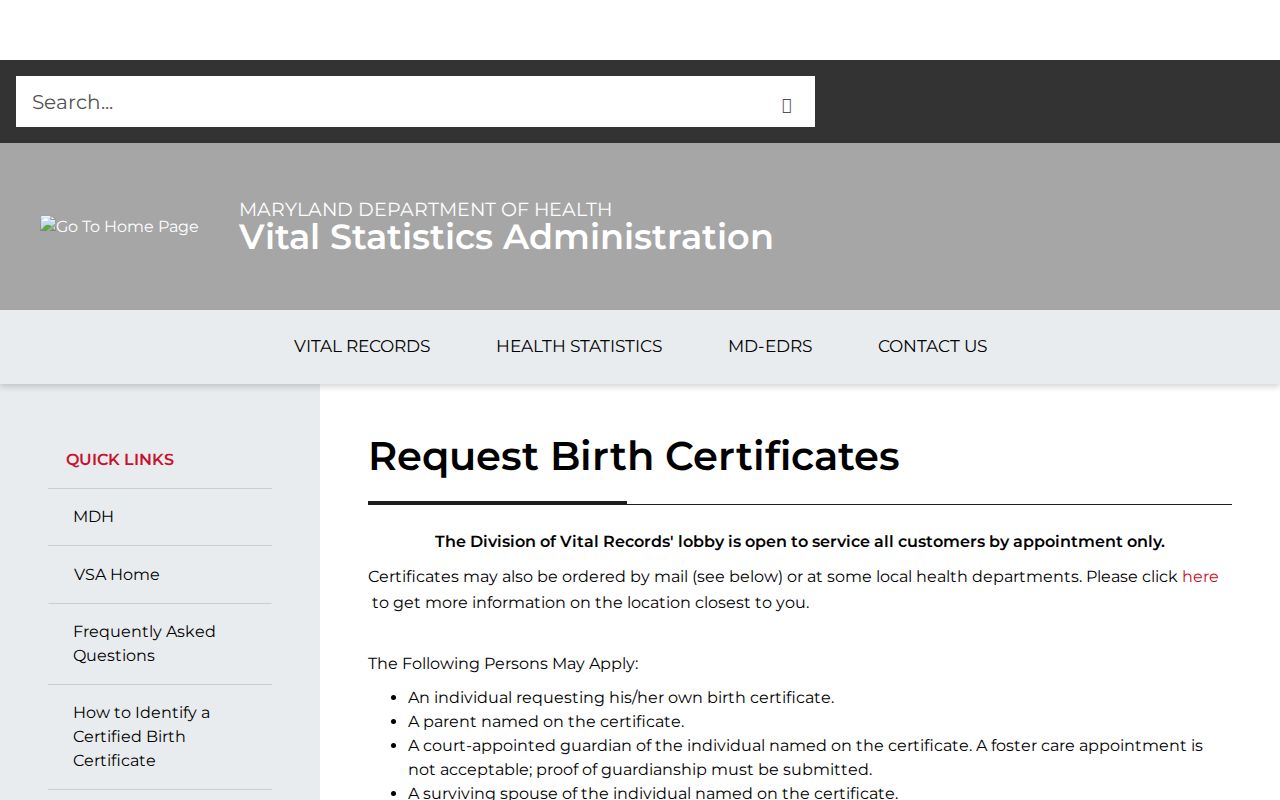
Recent certificates in Annapolis start with an eligibility rule. Only a qualified relative or authorized requestor may order. The Maryland Department of Health handles orders online or by mail. Either route includes an ID check and an entitlement review before anything ships. The Anne Arundel local health service point also handles birth and death certificates. It does so by appointment only. Older records live elsewhere. The Maryland State Archives guide points to online indexes, digital series, a search room, and mail orders. It covers each of those paths in one place. AACPL newspapers and local-history collections can corroborate what the archives show. For marriage or divorce questions, keep two things apart: an MDH verification letter versus the actual Circuit Court license or decree file. The distinction matters.
Annapolis Resident Lookup Roles
Annapolis records label people differently depending on the source. A property roll shows an owner name drawn from the latest deed. It may list a mailing address too. A deed itself names a grantor and a grantee. Those are the two sides of a legal transfer. Court indexes point to parties. Probate files name a decedent, a personal representative, or an attorney. A historic residents directory can list a householder, a boarder, or a subscriber. It can also list a business at an address. Read the role first. That habit keeps a dated record honest. It stops the record from becoming a shaky claim about who lives somewhere now.
| Record role | What it means in Annapolis research |
|---|---|
| Owner | A parcel or deed interest, not proof that the owner lives at the premises. |
| Voter | A nonconfidential registration match at the record date, not a complete household list. |
| Party | A named role in a public court matter, subject to index and confidentiality limits. |
| Decedent or representative | An estate or probate role that is valuable for historical context, not current residence. |
| Licensee | A credential or professional status with its own date and scope, not a residential finding. |
Some records prove more than others. Maryland Business Express and the Department of Labor license routes work only when a public entity or a credential is the record at issue. A residential claim is different. Neither tool can fill that gap. To resolve recurring names across Annapolis and the wider Anne Arundel County postal area, you still need a date, an address, and a second official record.
Annapolis Lookup Non-Confirmation
Sometimes the right answer is no answer. Maryland's Safe at Home Address Confidentiality Program gives eligible safety-risk applicants a substitute address. Mail forwarding comes with it. Voter confidentiality can hide a residential address, phone, and email from ordinary public inspection. The online voter form will not confirm a confidential voter's registration or ballot status. Sealed or expunged court files carry their own restrictions. So do recent vital certificates. Never try to rebuild a protected current address from old deeds or directories. Annapolis makes this safeguard especially relevant. The city sits inside overlapping address systems. These include postal places, county parcels, historic neighborhoods, and institutional addresses. A no-result may reflect confidentiality. It may instead reflect a date gap, a boundary quirk, or a portal's coverage limit. Write down the exact source, date, and filters searched. Then state only that the official route checked returned nothing.
Annapolis Resident Record Requests
Maryland's Public Information Act, General Provisions §§4-101 through 4-601, lets anyone ask an agency for a record. The record must already exist and not be exempt. The law has firm limits. It cannot force a custodian to create a new residents index. Nor can it confirm that a person lives at a given address. Strong requests work best. Name the record and the office that holds it. Give the address or person if known. Add a date range, the format you want, and a fee ceiling. A non-exempt permit file for one address fits. So does a City board record that names a person within a stated period. The City of Annapolis PIA request form covers a known City record.
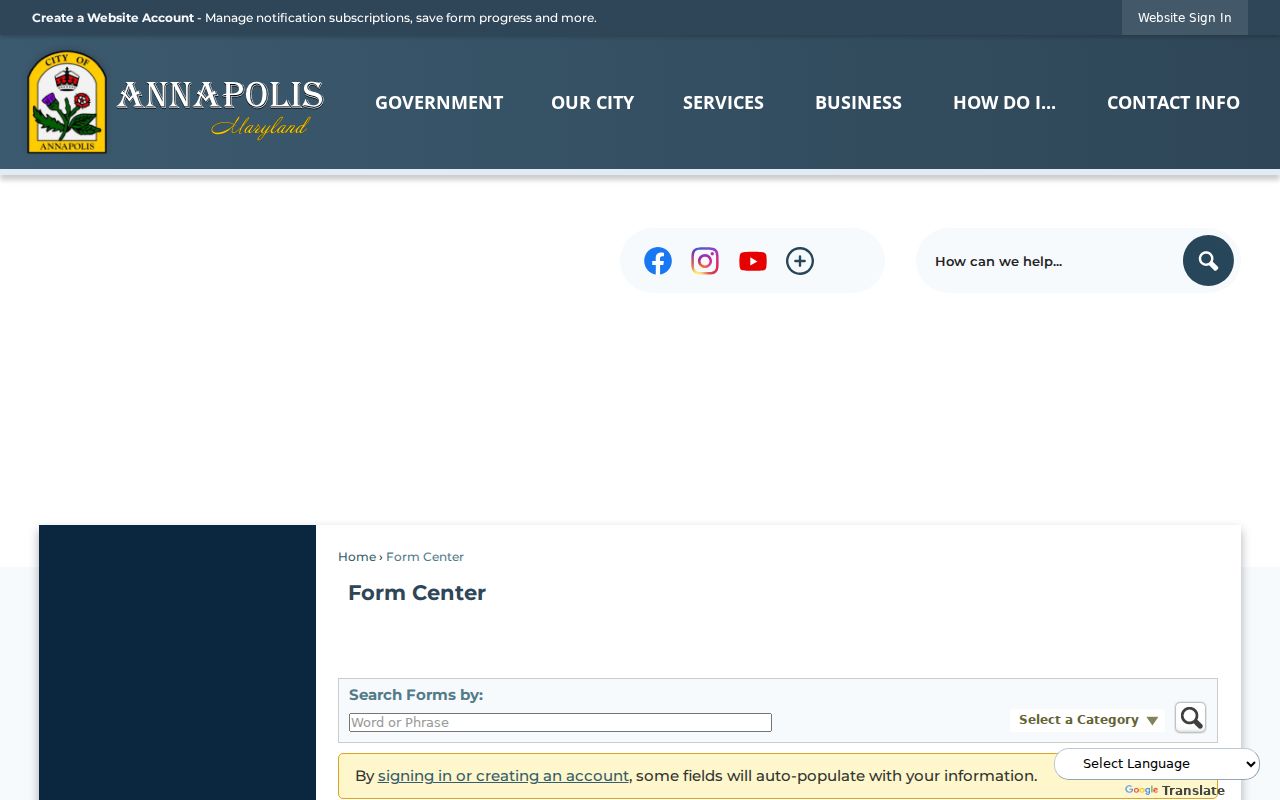
The form asks for details up front. Its request, fee, copy, and signature fields push you to define the record before submitting. Custody decides which route to use. The Anne Arundel County PIA route applies when the County holds the file. City-held records go through the City form instead. Under the Attorney General's PIA guidance, agencies may charge allowable fees and apply exemptions. Framing a wish as a records request does not help; a record that does not exist, or a new cross-database list of residents, stays out of reach.
Annapolis Resident Lookup Limits
Maryland public access has boundaries, drawn by the custodian and the record type. SDAT is an assessment tool. It is not a title report or a resident roll. Case Search labels its online information as informational rather than the authoritative court record. Election Law access and confidentiality rules govern voter data. Recent vital records copies require statutory eligibility. The Maryland Online Data Privacy Act grants rights against covered private controllers. Yet it cannot erase records that stay public under another law. If an administrative error appears, ask the responsible office to fix it. Keep the agency's response.
Lawful use. An Annapolis resident lookup is for personal, lawful research and civic or family-history questions. Do not use record details to stalk, harass, intimidate, or harm anyone.